Grooves Are Back: How Vinyl Outsold CDs and Won Over a New Generation
Something strange happened in the American music market recently, and it's the kind of thing that makes you stop and actually think about how people relate to music. Vinyl records — the big, clunky, beautiful discs your parents or grandparents used to stack next to a turntable — outsold CDs in the US for the first time in decades. Not by a little, either. The gap has been widening year over year, and the industry is still trying to fully wrap its head around it.
The easy narrative is nostalgia. But spend five minutes talking to the people actually buying records, and you'll realize it's a lot more complicated — and honestly, a lot more interesting — than that.
The Numbers Don't Lie
The Recording Industry Association of America confirmed what record store owners had been feeling in their bones for a few years: vinyl revenue hit levels not seen since the format's commercial peak. We're talking billions of dollars moving through a medium most people had written off as a quirky collector's hobby. Meanwhile, CDs — which dominated the '90s and early 2000s — kept sliding into irrelevance.
Streaming still runs the show when it comes to total consumption. Nobody's arguing otherwise. But when it comes to physical format sales, the turntable has officially lapped the disc player, and that's a cultural moment worth paying attention to.
Gen Z Didn't Get the Memo That Vinyl Was 'Dead'
Here's the part that really flips the script. The demographic driving a huge chunk of vinyl purchases isn't baby boomers chasing memories of their college years. It's teenagers and twenty-somethings who grew up with Spotify in their pockets. They have access to virtually every song ever recorded, for less than the price of a movie ticket per month — and they're still walking into record stores and dropping $30 on a single album.
Talk to any of them and you start to hear the same themes. There's something about holding the physical thing. Reading the liner notes. Deliberately choosing what you're going to listen to instead of letting an algorithm decide. In a world where everything is instant and infinite, the friction of vinyl feels almost radical.
One collector in Nashville who goes by the handle @vinylvaultgirl on TikTok — yeah, vinyl has a TikTok scene, and it's massive — put it plainly: "Streaming is like scrolling. Vinyl is like sitting down for a meal. I actually hear the music differently."
Small Stores Are Breathing Again
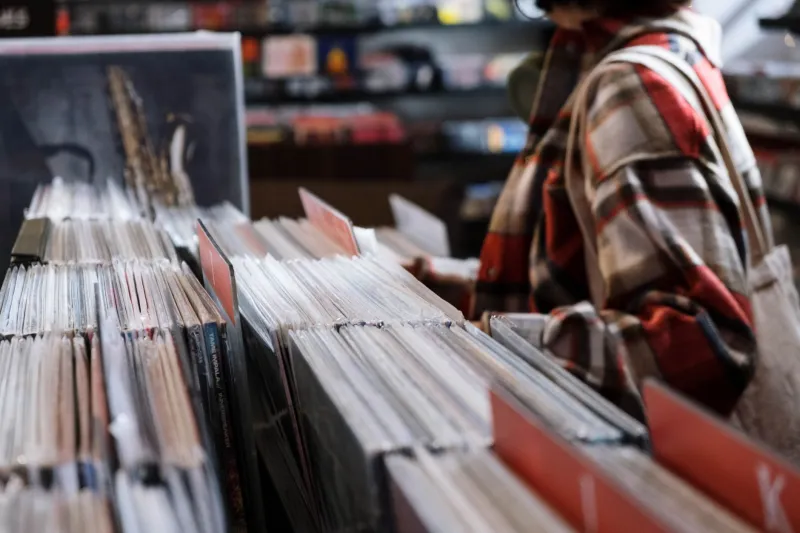
If you haven't visited an independent record store lately, you might be surprised by what you find. Shops that were genuinely fighting for survival a decade ago are now seeing foot traffic that would have seemed unthinkable in the early streaming era. Record Store Day, the annual celebration that draws lines around the block at indie shops nationwide, has become a genuine cultural event — not just for diehards, but for casual fans who want the experience of hunting for something special.
Owners of shops in cities like Asheville, North Carolina, and Bozeman, Montana — places not exactly known as music industry hubs — have talked openly about how the vinyl boom gave their businesses a second life. The community aspect has come roaring back too. People linger. They flip through crates. They ask for recommendations. It's the opposite of the frictionless, solitary experience of opening an app.
Artists Are Leaning In Hard
Major artists figured out pretty quickly that vinyl isn't just a format — it's a statement. Taylor Swift's limited-edition pressings sell out within minutes. Beyoncé drops color variants that become collector's items before the shrink wrap is off. Even newer artists who built their entire fanbase on streaming are rushing to press vinyl because they understand what it signals: this music is worth owning, not just streaming.
For some artists, the connection goes deeper than marketing. Producers and songwriters have talked about how mastering for vinyl — which requires a different approach to dynamics and frequency — actually changed how they thought about making the music in the first place. The format shapes the art. That's not nothing.
One indie artist from Los Angeles described pressing her debut EP on vinyl as the moment her music felt "real" to her. "Streaming numbers are just a number on a screen," she said. "Holding that record, putting the needle down — that's when I knew I'd actually made something."
Is It Just a Trend, or Is It Here to Stay?
Skeptics are right to ask the question. Trends come and go, especially in music culture. But there are a few reasons to think vinyl's resurgence has more staying power than, say, the brief cassette revival.
First, the infrastructure has rebuilt itself. Pressing plants that had been shuttered or running at skeleton capacity have reopened and expanded. Turntable manufacturers are releasing entry-level models at accessible price points, pulling in buyers who might not have considered the format before.
Second — and maybe more importantly — vinyl taps into something that streaming simply can't replicate. It's tangible. It's intentional. It creates a ritual around listening that a lot of people, especially younger ones who've grown up in a world of endless digital distraction, are genuinely hungry for.
The groove is back. And it sounds pretty good.