From Bedroom to Billboard: How a $500 Setup Is Rewriting the Rules of Music Production
There's a running joke in music circles that the best studio in the world is the one you actually have access to. For most of music history, that meant you either knew someone with money, got signed to a label that fronted the costs, or you waited. You just waited — hoping someone with a key card and a mixing board would eventually let you in.
That joke doesn't land the same way it used to.
Right now, in apartments across Brooklyn, in spare bedrooms in Atlanta, in converted closets in Los Angeles and college dorms in the Midwest, a generation of artists is making music that sounds genuinely competitive with major-label releases. Not almost-there. Not "pretty good for a home recording." Actually competitive. And in a lot of cases, they're doing it on a budget that wouldn't cover two hours at a professional studio.
The bedroom studio revolution isn't coming. It's already here.
What "Affordable" Actually Looks Like in 2024
Let's talk real numbers for a second. A workable home recording setup — one capable of producing release-quality audio — can be assembled for somewhere between $400 and $600. That's not a myth. Here's what that looks like in practice:
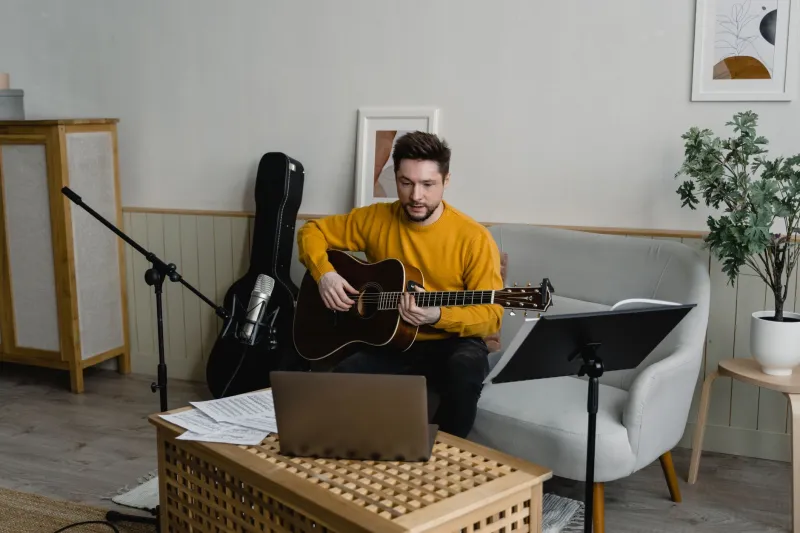
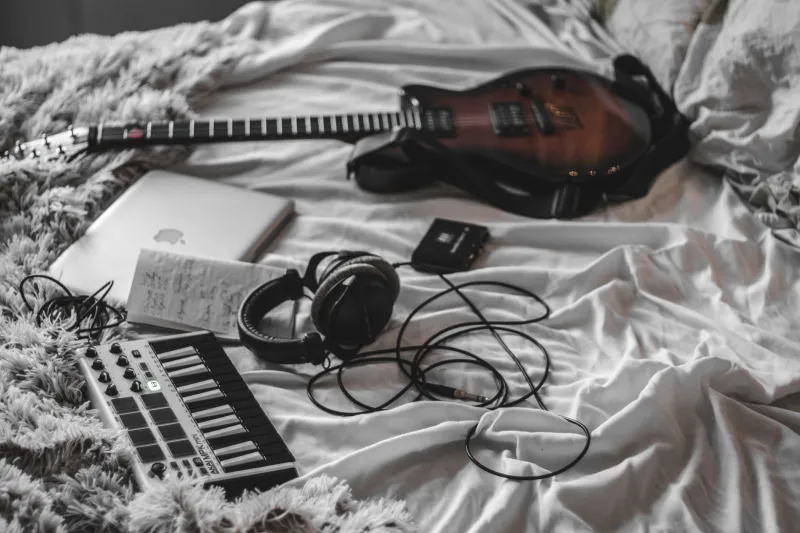
A USB audio interface like the Focusrite Scarlett Solo runs around $120. A solid condenser microphone — the Audio-Technica AT2020, for instance — goes for about $100. Throw in a pair of studio headphones (Sony MDR-7506, a longtime industry standard at $100), a pop filter, and some basic acoustic foam panels, and you're still under $400. Add a DAW — digital audio workstation — and you've got a full recording environment. Most artists start with GarageBand, which is free on Mac. Others graduate quickly to FL Studio (around $99 for the basic version) or Ableton Live Intro at $99.
That's it. That's the setup that has launched careers.
Real People, Real Rooms
Take someone like Marcus Webb, a 24-year-old R&B producer out of Chicago who built his entire debut EP in a walk-in closet surrounded by hanging clothes — which, as it turns out, is actually decent acoustic dampening. His interface? A Scarlett 2i2. His monitor speakers? He didn't have any for the first six months. He mixed everything on headphones and checked his mixes on his phone speaker and his car stereo, a technique called "mix translation" that seasoned engineers swear by.
His EP got picked up by a mid-size playlist with 200,000 followers. One track crossed 800,000 streams. He still hasn't set foot in a professional studio.
Or consider Dani Reyes, a singer-songwriter based in Austin who started recording during the pandemic lockdowns with nothing but a Blue Yeti mic plugged directly into her laptop and Logic Pro. She learned compression, EQ, and reverb on YouTube — channels like Produce Like A Pro and In The Mix have become the unofficial music schools for this generation. Her self-produced single landed her a sync placement in a Netflix series.
These aren't anomalies. They're the new normal.
The Tools That Changed Everything
Beyond the hardware, the real democratization happened in software. Modern DAWs come loaded with virtual instruments, sample libraries, and plugin suites that would have cost tens of thousands of dollars in the 90s. Splice, a subscription-based platform for $10/month, gives artists access to millions of royalty-free samples and loops. Native Instruments' free Komplete Start bundle includes synths and effects that professional producers use on major releases.
AI-assisted tools like iZotope's Ozone have made mastering — once the exclusive territory of expensive mastering engineers — something a first-year producer can do passably well on their own. Auto-tune and pitch correction, once a studio luxury, are now standard features in nearly every DAW.
The gap between what a bedroom producer can achieve and what a professional studio delivers has narrowed dramatically. It hasn't disappeared — a great recording engineer and a properly treated room still matter — but the gap is now small enough that creativity and work ethic can close it.
The New Gatekeeping Problem
Here's the honest part, though. Because this is worth saying clearly: the democratization of production tools is genuinely exciting, but it's also created a new problem.
When everyone has access to the same gear and the same plugins, the barrier to entry collapses — and so does the signal-to-noise ratio. Spotify adds roughly 100,000 new tracks every single day. A huge percentage of those are home-produced. Most of them will never be heard by anyone outside the artist's immediate circle.
The tools being affordable doesn't automatically make the music good. And good music being easy to make doesn't make it easy to find an audience. The old gatekeeping — labels, studios, A&R reps — was brutal and unfair, but it did create some kind of filter. Now the filter is the algorithm, and the algorithm doesn't care about your art. It cares about engagement metrics.
So the bedroom producer in 2024 has to be more than just a musician. They have to understand metadata and tagging, playlist pitching, social media content strategy, and release timing. They have to be their own label, their own publicist, and their own marketing department — all while trying to actually make music that means something.
That's a lot to ask of one person in a closet surrounded by hanging clothes.
What Actually Separates the Ones Who Break Through
Talent is obvious. But beyond raw ability, the artists who actually build something out of a home setup share a few common traits.
Consistency over perfection. The producers who gain traction are the ones releasing music regularly — not waiting until everything is flawless. An 80% track out in the world beats a perfect track sitting on a hard drive.
Community over isolation. Discord servers, Reddit communities like r/WeAreTheMusicMakers, local open mics, producer forums — the bedroom studio doesn't have to mean working alone. Collaboration, feedback, and mutual promotion are still huge drivers of growth.
Ear training over gear obsession. The artists who actually level up are the ones obsessing over listening — studying the records they love, deconstructing arrangements, understanding why certain mixes hit the way they do. No plugin fixes a bad ear.
The Bottom Line
The professional studio isn't dead. It's still where a lot of the best-sounding records get made, and there's real value in working with experienced engineers in a properly treated space. But it's no longer the only path — and that matters enormously.
For the first time in the history of recorded music, the question isn't can you afford to make something? It's do you have something worth saying?
That shift is bigger than any piece of gear. It's a fundamental change in who gets to participate in music, who gets to tell their story, and who gets to be heard.
And honestly? That's worth celebrating — even if the closet acoustics aren't perfect.