Wear the Show: How the Concert Tee Became the Most Loaded Piece of Clothing in Your Closet
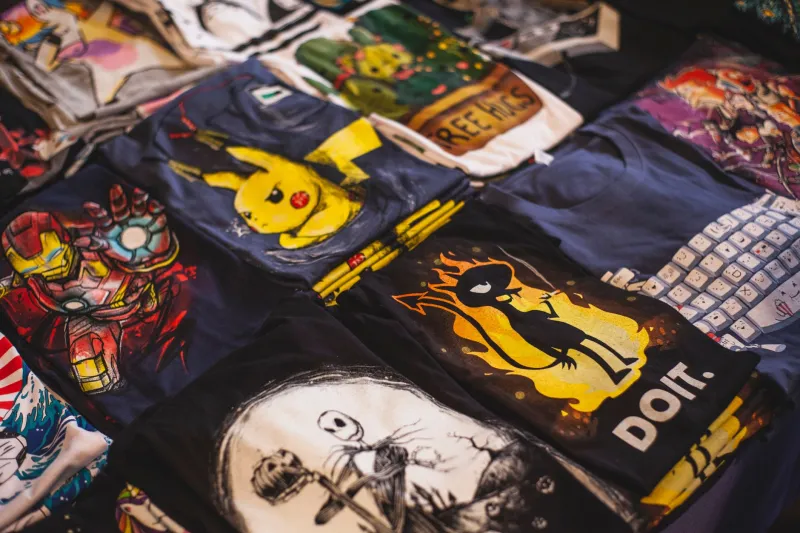
There's a specific kind of pride that comes with pulling on a faded, slightly oversized shirt from a show you saw three years ago. It's not vanity exactly — it's more like a timestamp. Proof that you were somewhere that mattered, that you stood in a crowd and felt something real. The concert T-shirt has always carried that energy. But lately? It's carrying a whole lot more.
We're living through a genuine merch moment, and it's not just about nostalgia or streetwear crossover hype. Something deeper is happening at the intersection of live music, personal identity, and the economics of being an artist in 2024. The tour tee has quietly transformed from a souvenir stand impulse buy into one of the most culturally loaded garments you can own.
From the Merch Table to the Front Row of Fashion
Let's be honest: for a long time, concert merch was kind of an afterthought. Boxy cuts, clunky fonts, designs that looked like they were knocked together in an afternoon. You bought it because you wanted a piece of the night, not because you'd actually wear it on a Tuesday.
That started shifting in a big way around the mid-2010s, when artists began treating merch with the same creative seriousness as their album art. Kanye's Yeezus tour pop-up shops in 2013 were a genuine inflection point — suddenly, a concert shirt could sell out faster than a Supreme drop. The fashion world took notice. So did the fans.
Now, the standard has been completely reset. Beyoncé's Renaissance World Tour merch wasn't just clothing — it was a coordinated visual universe, extending the album's Afrofuturist aesthetic into wearable form. Taylor Swift's Eras Tour generated merch lines that fans camped out for, resold on StockX, and catalogued on TikTok like sneakerheads tracking colorways. These aren't just shirts anymore. They're artifacts.
The Economics Behind the Cotton
Here's the part that doesn't get talked about enough: for most musicians, merch isn't a side hustle. It's a primary revenue stream, and in many cases, it's the difference between touring being sustainable or not.
Streaming has fundamentally restructured where artist income comes from. A billion streams sounds impressive until you do the math and realize that translates to somewhere in the range of $3–4 million — split among a label, producers, collaborators, and a management team before the artist sees a dollar. For independent artists and even mid-level acts on major labels, those numbers shrink fast.
Live music and merch fill the gap. Industry estimates suggest that merch can account for anywhere from 20 to 40 percent of an artist's touring income, and for some acts — particularly in the indie and alternative spaces — that percentage climbs even higher. When you buy a shirt at a show, you're not just picking up a souvenir. You're directly funding the next record, the next tour, the next chance for that artist to keep doing what they do.
Smarter artists have figured this out and leaned in hard. Indie acts like Phoebe Bridgers and boygenius have built merch programs that feel genuinely thoughtful — limited runs, unusual items, designs that reward the fans who are paying attention. It creates scarcity, sure, but it also creates a sense of participation. You're not just a consumer. You're part of something.
What You're Actually Saying When You Wear One
Stroll through any major US city on a weekend and count how many concert shirts you see. Chances are, they're not all from recent tours. That vintage Nirvana tee, the Kendrick Lamar DAMN. shirt, the worn-in Grateful Dead bootleg from a thrift store in Austin — they're all communicating something, whether the person wearing them knows it or not.
Concert merch functions as a kind of shorthand. It signals taste, tribal affiliation, and sometimes a very specific kind of cultural capital. There's a reason people are willing to pay $200 on eBay for a shirt from a tour they didn't even attend. The garment carries a story, even if it's not your story. You're borrowing the mythology.
For younger fans especially, wearing merch is an act of identity construction. In an era where so much of how we present ourselves plays out digitally — curated playlists, aesthetic Instagram feeds, Spotify Wrapped screenshots — the physical shirt is a tangible commitment. You can't algorithm your way into owning a Mitski tour tee. You had to choose it. That choice means something.
The Collector's Market and the Resale Reality
The secondary market for concert merch has exploded, and it's reshaping how both fans and artists think about the whole ecosystem. Platforms like Depop, Grailed, and even eBay have become serious marketplaces for tour apparel, with rare pieces fetching prices that would've seemed absurd ten years ago.
A shirt from Radiohead's OK Computer tour? Easily three figures. Anything from a Prince show? Good luck finding it under $500. Even merch from more recent tours — particularly anything limited-run or tour-exclusive — can double or triple in value within months of a show ending.
Artists have responded in a few different ways. Some have leaned into the scarcity model deliberately, dropping limited quantities to build hype and reward the most dedicated fans. Others have pushed back, making merch more accessible and affordable specifically because they don't want it gatekept by resellers. There's a real tension there, and how an artist navigates it says a lot about how they see their relationship with their audience.
A Wearable Record of What Mattered
At the end of the day, the concert shirt endures because live music is irreplaceable — and we all know it. In a world where you can stream anything, anywhere, anytime, the experience of being in a room with thousands of other people and feeling music move through you is genuinely precious. It can't be replicated. It can't be downloaded.
The shirt is the closest thing to a receipt for that experience. It's physical proof that you showed up, that you were present for something that only happened once and will never happen exactly that way again. In an increasingly ephemeral culture, that matters more than people probably realize.
So yeah, the concert tee is having a moment. But really, it's always been having a moment. We're just finally paying attention to what it's been saying all along.