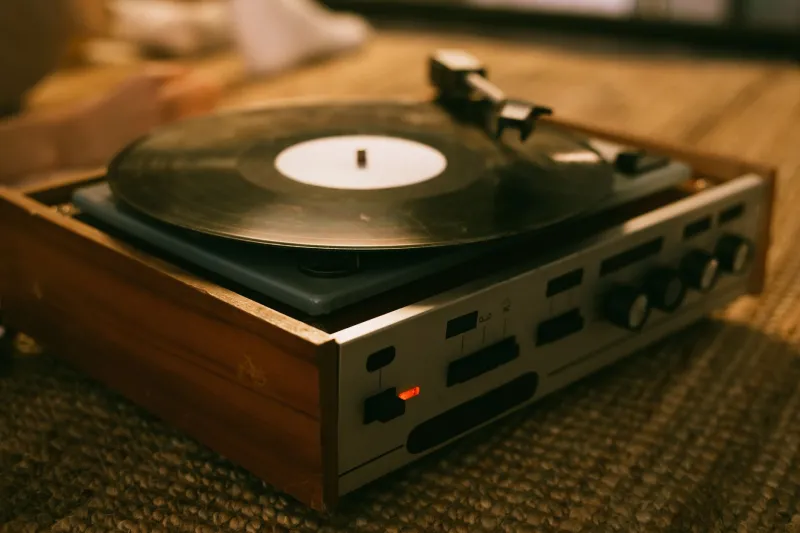
The People Who Pick the Song: Inside the Hidden World of TV Music Supervision
You Know the Feeling
You're watching a TV show. Something heavy just happened on screen. Then a song kicks in — maybe one you've never heard before, maybe one you forgot existed — and suddenly you're wrecked. Not just because of what happened in the story, but because of how that song landed on top of it. You screenshot the moment. You Shazam it. You text someone.
That reaction didn't happen by accident. Somebody engineered it.
Music supervisors are the people behind that moment. They're not composers. They're not showrunners. They sit somewhere in between the creative and business sides of entertainment, doing a job that's equal parts emotional intelligence and industry hustle. And for a role this influential, they almost never get talked about.
What a Music Supervisor Actually Does
The short version: they find the right song for the right scene and then do everything necessary to legally put it there.
The longer version is a lot messier. A music supervisor reads scripts, watches rough cuts, consults with directors and showrunners, digs through catalogs, pitches songs, negotiates licenses, manages budgets, and sometimes has to fight hard for a track they believe in. They're doing creative work and legal work and diplomatic work, often all at once.
They also have to know music — not just what's popular right now, but what was popular, what got slept on, what exists in corners of the catalog that most people never find. The best ones are essentially walking music encyclopedias with strong opinions and good taste.
And their decisions carry weight. Real weight.
The Needle Drop That Changes Everything
Ask anyone who works in music licensing what a major TV placement can do for an artist's career, and they'll have a story ready. Kate Bush's "Running Up That Hill" is the obvious recent example — a song from 1985 that Stranger Things turned into a streaming phenomenon in 2022, pushing it to number one in multiple countries and introducing it to an entire generation that wasn't alive when it was recorded. Bush herself called it surreal.
But that kind of resurrection happens more quietly all the time. A supervisor puts an indie artist's track in a key scene on a prestige drama, and by the next morning that artist has more Spotify streams than they've seen in their entire career. Sometimes it's a song that's been sitting there for years, waiting for the right moment. The supervisor finds that moment.
For emerging artists, a single placement can be more valuable than a label deal. It's direct exposure to millions of viewers at a moment when they're emotionally primed to connect with music. That's a different kind of listening than scrolling a playlist. People remember what they hear in those moments.
The Art of Matching Emotion to Melody
What makes a great music supervisor isn't just having good taste — it's understanding how music functions emotionally in a scene. The wrong song at the right moment is still the wrong song. A track can be beautiful and still kill the energy of a scene if it's pitching the wrong emotional frequency.
The best supervisors talk about this almost like a language. They're reading the scene, understanding what the director wants the audience to feel, and then finding music that speaks that same language without being too obvious about it. Sometimes the most powerful choice is something unexpected — a song that creates contrast or irony, that reframes what you just watched. Think of the moments in Breaking Bad or Euphoria where the music choice felt almost jarring at first, and then completely right.
There's also the question of lyrics versus instrumentals, of tempo, of genre, of cultural associations. A song carries its whole history into a scene with it. Supervisors have to think about all of that. They're not just picking songs they like. They're thinking about what a song means to the audience.
The Business Side Nobody Talks About
Here's the part that doesn't make it into the romantic version of this story: music supervision is also a licensing grind. Getting a song into a TV show requires clearing rights from multiple parties — usually the publisher (who controls the composition) and the label (who controls the master recording). Both have to say yes. Both cost money. And budgets on TV productions vary wildly.
Sometimes a supervisor falls in love with a track and can't afford it. Sometimes they go back and forth with a rights holder for weeks. Sometimes they find out the rights are tied up in a dispute and the song is effectively off the table. The job requires patience, relationships, and the ability to pivot fast when a plan falls apart.
This is also why independent artists and smaller publishers can sometimes be easier to work with — they're more flexible, more responsive, and often more excited about the opportunity. A supervisor who builds relationships in the indie world can move quickly and find gems that a bigger production might overlook.
Why This Role Is Only Getting More Important
Streaming changed everything for music supervisors. When a show drops on Netflix or Hulu and a song goes viral from a scene, the data is immediate and impossible to ignore. Streams spike overnight. Social media clips the moment. The song takes on a second life. Labels and publishers are paying attention to this in a way they never had to before, which means music supervisors are increasingly seen as powerful partners — not just service providers.
At the same time, the sheer volume of content being produced means the demand for skilled supervisors has never been higher. Every streaming platform is churning out original series. Every series needs music. And not every production can afford to get it wrong.
The Credit They Rarely Get
Here's the thing that still doesn't sit right: most people who feel that gut-punch moment when a song hits perfectly in a TV scene have no idea who made it happen. The director gets the credit. The showrunner gets the credit. The composer sometimes gets the credit. The music supervisor is usually buried in the end credits, if they're listed prominently at all.
That's slowly starting to change. There's more industry conversation about the role. A few supervisors have built public profiles. But for the most part, they're still doing some of the most emotionally resonant work in entertainment from a place of near-total anonymity.
Which, honestly, might be part of why it works. The best needle drops feel inevitable — like the song was always supposed to be there. The craft is invisible. And maybe that's exactly the point.