The Artist Nobody Talks About: How Mixing Engineers Shape the Songs You Love

Think about the last song that genuinely stopped you in your tracks. Maybe it was the way the bass hit your chest just right. Maybe it was the way a vocal seemed to float above everything else, close enough to feel personal. Maybe it was the way the whole thing just breathed — like every sound had its own space, its own reason for being there.
Now ask yourself: who made that happen?
You probably thought of the artist. Maybe the producer. If you're really plugged in, maybe even the songwriter. But there's a solid chance you never thought about the mixing engineer — the person who sat in a dark room with thousands of decisions to make and somehow made all of them right.
That invisibility? It's the whole point. And it's also kind of a crime.
What Mixing Actually Is (And Isn't)
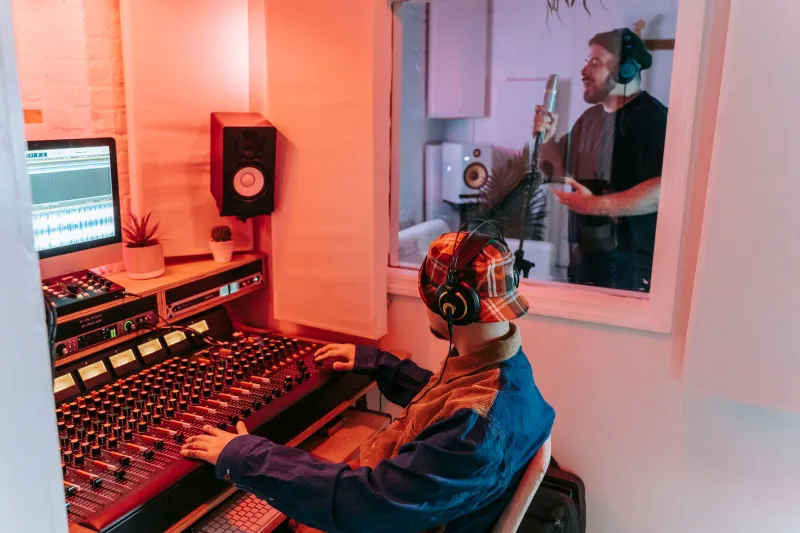
Here's a misconception worth clearing up fast: mixing is not the same as mastering, and it's not just turning knobs until things sound louder. By the time a mixing engineer gets a session, they're typically receiving dozens — sometimes hundreds — of individual audio tracks. Drums split into eight or ten separate pieces. Multiple vocal takes. Stacked guitars. Synth layers. Percussion loops. Ambient textures. Background harmonies.
Their job is to take that chaos and turn it into something that feels effortless.
That means making decisions about volume, yes, but also about frequency — carving out space so that the kick drum and the bass guitar aren't fighting each other in the low end. It means using compression to control dynamics so a vocal stays present whether the singer is whispering or belting. It means panning sounds across the stereo field to create a sense of width and dimension. It means adding reverb and delay in ways that feel natural rather than obvious.
And it means doing all of that while serving the emotion of the song. Because the best mixing engineers aren't just technicians. They're storytellers working in frequencies.
The Names You Should Know
If producers like Rick Rubin and Max Martin have started crossing over into mainstream name recognition, mixing engineers are still largely unknown outside of industry circles. But the names are there if you go looking.
Chris Lord-Alge has mixed records for Bruce Springsteen, Green Day, and Matchbox Twenty — his signature is a punchy, in-your-face energy that makes rock records feel like they're about to burst out of your speakers. His brother Tom Lord-Alge has his own legendary run, including work with Billy Idol and Dave Matthews Band.
Andrew Scheps mixed Adele's 21, Beyoncé's Lemonade, and records for Red Hot Chili Peppers and Metallica. That's not a coincidence — that's an ear that translates across genres, across decades, across emotional registers.
Serban Ghenea is the guy behind some of the biggest pop records of the last fifteen years, including work with Taylor Swift, Katy Perry, and The Weeknd. If you've heard a massive pop chorus in the 2010s or 2020s, there's a decent chance his fingerprints are on it.
These people have shaped American pop culture as much as any artist. They just don't get the magazine covers.
Why the Best Mixes Disappear
Here's the paradox at the heart of this whole conversation: the better a mix is, the less you notice it. A great mix doesn't call attention to itself. It just makes everything feel right — like the song couldn't have existed any other way.
That's almost philosophically unfair. The more skilled the work, the more invisible it becomes. A glitchy, muddy, or unbalanced mix is immediately obvious to anyone with ears. But a perfect mix? It sounds like it just happened naturally, like the song arrived fully formed.
That's not an accident. That's craft at the highest level.
Mixing engineers talk about this dynamic all the time. The goal is never to make the mix the thing people notice — it's to make the song the thing people feel. When Andrew Scheps is working on a record, he's not trying to leave a signature. He's trying to disappear into the music and make it as powerful as it can possibly be.
That kind of selfless artistry deserves a lot more respect than it gets.
The Emotional Architecture of a Song
Let's get specific for a second, because the technical stuff only tells part of the story.
When a mixing engineer decides how much reverb to put on a vocal, they're not just making a sonic choice — they're making an emotional one. A dry, close vocal feels intimate and vulnerable. A heavily reverbed vocal feels expansive, cinematic, almost spiritual. That choice changes how you feel the song.
When they decide to let the low end breathe on a hip-hop track versus tightening it up for a pop record, they're shaping the physical experience of listening. Bass frequencies hit your body, not just your ears. The mixing engineer is literally deciding how much the music moves you.
When they build a mix that gets quieter and more spacious in the verses and then crashes open in the chorus — that surge of energy you feel? That's not the artist alone. That's collaboration. That's the mix doing its job.
Every emotional peak in your favorite song was engineered by someone. That's not a cynical thing to say. It's actually kind of beautiful.
The Streaming Era and New Pressures
If mixing was already a demanding craft, the streaming era has added a whole new layer of complexity. Songs are now being heard on everything from $5 earbuds to high-end studio monitors to car speakers to smart home devices. A mix has to work across all of those contexts simultaneously.
On top of that, streaming platforms like Spotify and Apple Music apply loudness normalization — which means that old-school trick of just making everything as loud as possible doesn't work the way it used to. Modern mixing engineers have had to adapt their approach, thinking more carefully about dynamics and space rather than just pushing the ceiling.
It's made the job harder. It's also made the artistry more important.
Give Them Their Flowers
The music industry has gotten better about crediting producers. Fans are starting to know names like Metro Boomin, Jack Antonoff, and Finneas. That's a good thing — those people deserve recognition.
But the conversation needs to go one step further. The mixing engineer is just as responsible for why a song hits the way it does. They're the last major creative voice before a record reaches your ears, and the decisions they make are the difference between a song that's good and a song that's unforgettable.
Next time you're deep in a record that just sounds right — where everything feels balanced and alive and emotionally exact — take a second to scroll to the credits. Find the mixing engineer's name. Learn it.
They earned it.